
Back
A Natural History of Repetition
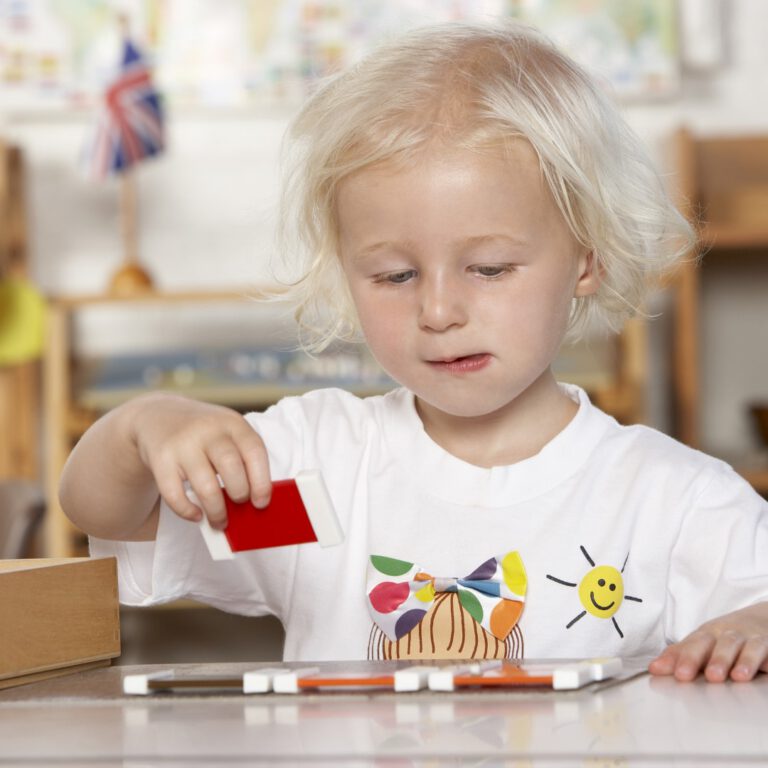
In a speech to the NEA in America in 1915, Montessori described how a child, fully absorbed in a wooden block activity, repeated their work, over and over, creating 44 different exercises with the material. The child's attention was intense and purposeful because the child was given the freedom, the space and the time to engage with the work without interruption. When done, "she looked around with an expression of great satisfaction, as if she were awakening from a deep and restful sleep" (Montessori, 1915:65).
In The Secret of Childhood, Montessori says that “The child feels the need to repeat this exercise not in order to perfect his performance but in order to build up his own inner being, and the time taken, the number of repetitions required, the hidden law inherent in the spiritual embryo is one of the child’s secrets” (2017: 161 – Kindle)
Montessori attached great significance to the value of repetition, identifying it as a natural and crucial part of children’s development. But there has been little empirical evidence, so far, to support her claim: in fact, most research has considered repetition in terms of psychopathology.
This research, shared in the Journal of Montessori Research, explored typically developing children’s repetitive behaviour in a free-play, daycare setting. By studying repetition in a non-Montessori setting, the authors tested the assumption that repetition is a characteristic behaviour of all young children and not limited to the Montessori environment.